


What Size Coffee Roaster Do You Need? Guide & Calculator
Ask any roaster about their first machine, and you'll hear a familiar story. They outgrew it. Driftaway Coffee started on a home roaster that held 8 to 9 ounces per batch. Putting in 16 hours of roasting at that size wore them down. Bean Smitten in England built its business around a 6 kg Giesen, then moved up to 15 kg as wholesale grew.
Outgrowing a roaster means business is good. Outgrowing it in year one means you sized it for the wrong number. And a drum too big to fill causes its own headaches.
So what size coffee roaster do you need? You'll work it out below from your own weekly volume, not from a spec sheet. You'll get a four-step method, a capacity table, and three worked examples. You'll also see what each size tier asks of your space.
Want a quick answer? Jump to the roaster size calculator.
Key Takeaways
- A roaster's size rating is the maximum green coffee it takes per batch, not what it produces per hour.
- For planning, assume about 3 batches an hour at 50-70% of the rated capacity.
- Roasted coffee weighs 14 to 20% less than the green coffee you put in.
- Size for the weekly volume you expect two years from now, not the volume you sell today.
- A well-sized roaster handles your weekly volume in 25 roasting hours or less.
- Quick rule: divide your weekly roasted volume in kilograms by 38 to get a starting batch size.
- Each step up in size brings bigger gas, venting, power, and floor space needs.
- Outgrown your current machine? It can become another roaster's right-sized starter.
What a Coffee Roaster's Size Rating Actually Means
When a listing says "12 kg roaster," it means the drum can hold up to 12 kg of green coffee in a single batch. That's it. The number says nothing about hourly output or how much roasted coffee you'll bag.
Many American machines are rated in pounds instead. A San Franciscan SF-25 takes 25 lb, which is roughly 12 kg. Keep the conversion handy: 1 kg equals about 2.2 lb.
Two things shrink the real output. First, coffee loses water and mass as it roasts. Second, most roasters don't run every batch at full capacity, and they shouldn't. That gap between the rated number and real output is why so many first roasters end up undersized.
How to Work Out the Roaster Size You Need in 4 Steps
Step 1: Estimate your weekly roasted volume two years out
Add up every channel you plan to supply: your own espresso bar, retail bags, wholesale accounts, and online subscriptions. Then project forward. Coffee consultant Scott Rao recommends sizing a roaster around the weekly volume you expect two years after you buy it, and we agree. A roaster sized for today is often too small within a couple of growth spurts.
Step 2: Convert roasted coffee back to green coffee
Roasting drives off moisture, so you need more green coffee than the roasted weight you sell. According to Barista Hustle, roast weight loss usually runs 14 to 20%. Light roasts sit at the low end. Dark roasts sit at the high end or above.
For a quick estimate, divide your weekly roasted target by 0.85. If you sell 100 kg of roasted coffee a week, plan on roasting about 118 kg of green.
Step 3: Find the roaster's real hourly output
Here's the planning formula we use. Multiply the rated batch size by 0.6 (a 60% batch), then by 3 batches per hour. That gives you green kilograms per hour. The shortcut is simple: rated size times 1.8.
Manufacturer figures run higher. Diedrich lists its DR-5 at about 18 kg of green coffee per hour on a 5 kg batch. That figure assumes full batches back to back. Our planning number for the same size is about 9 kg per hour. The difference covers the real day: warm-up, cooling, cleaning, cupping, and partial batches for small orders.
Step 4: Check the 25-hour line
Divide your weekly green volume by the roaster's planning output per hour. The result is roasting hours per week. If it lands above 25, step up a size. If it's below 25, you have room for bagging, sales, and the rest of the business.
Want the one-line version? Take your weekly roasted volume (kg) and divide by 38. The answer is the smallest rated batch size that fits your volume in 25 hours.
Coffee Roaster Capacity at a Glance
This table uses the planning formula above: 60% batches, 3 batches an hour, and 15% weight loss.
| Rated Batch Size | Green Coffee per Hour | Roasted Coffee per Hour | Roasted Coffee in a 25-Hour Week |
|---|---|---|---|
| 1 kg (2.2 lb) | 1.8 kg | 1.5 kg | About 38 kg (84 lb) |
| 3 kg (6.6 lb) | 5.4 kg | 4.6 kg | About 115 kg (253 lb) |
| 5 kg (11 lb) | 9 kg | 7.7 kg | About 191 kg (422 lb) |
| 12 kg (26 lb) | 21.6 kg | 18.4 kg | About 459 kg (1,012 lb) |
| 15 kg (33 lb) | 27 kg | 23 kg | About 574 kg (1,265 lb) |
| 25 kg (55 lb) | 45 kg | 38.3 kg | About 956 kg (2,108 lb) |
Treat these as planning numbers, not limits. A skilled roaster on a well-tuned machine will beat them. That headroom is exactly what you want on your busiest week.
Coffee Roaster Size Calculator
Skip the math. Enter your numbers and see which roaster size fits your business.
Find your roaster size
Free toolEnter your numbers to find the roaster size you need for the next two years.
Planning estimate: about 3 batches an hour at 60% of rated batch size. Skilled roasters on well-tuned machines often beat it, so treat it as a safe floor.
Three Worked Examples
A café roasting for its own bar and retail shelf
The café sells about 50 lb of coffee a week today and expects to double that in two years. That's 100 lb, or roughly 45 kg roasted, which works out to about 53 kg green.
On a 1 kg roaster, that's around 29 hours a week. Too tight. On a 3 kg machine, it drops to about 10 hours, which is two or three focused mornings. A 2-3 kg drum is the right call here.
A wholesale startup supplying a few cafés
This roaster plans to supply three cafés plus online orders. The two-year target is about 400 lb (181 kg) roasted a week. That's roughly 213 kg of green coffee.
A 5 kg machine handles it in about 24 hours. It fits, but barely, and one new account pushes it over the line. A 10-12 kg roaster brings the same volume down to about 10 hours. If you expect to keep adding accounts, size up now.
A roastery scaling into larger accounts
The target here is 1,500 lb (680 kg) roasted a week, or about 800 kg green. A 15 kg roaster would need nearly 30 hours, already past the line. A 25 kg machine covers it in about 18 hours, with room to grow. This buyer belongs in the 20 kg and up tier.
Coffee Roaster Sizes by Tier: Who Each One Fits
Sample roasters (100 g to about 1 kg)

A Proaster THCR-005 Sample Roaster, built for test roasts rather than production.
Sample roasters are for profiling green coffee and testing blends, not for filling retail bags. Production roasteries often keep one beside the main machine so they can test new lots without tying up a big drum.
Small batch roasters (1 to 4 kg)
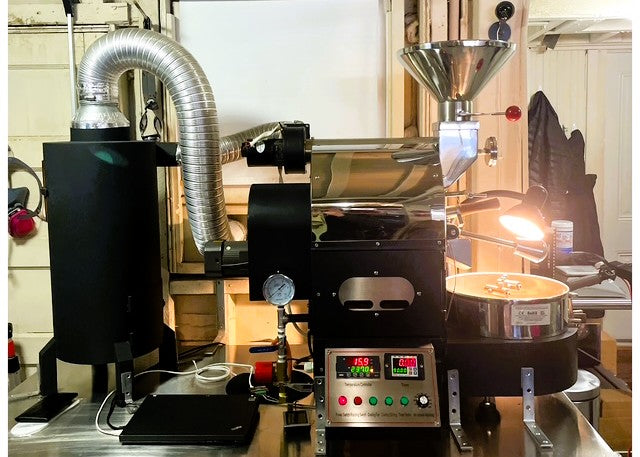
A North Coffee Roasters TJ-067, a common first roaster for cafés roasting in-house.
This is where most cafés and micro-roasters start. Machines like the Mill City MCR-1 and Diedrich IR-1 fit a compact footprint. Some run fully electric. Gas units still need proper venting. Browse current small batch roasters (1 to 4 kg), or compare specific models in our guide to the best coffee roaster machines for small business.
Medium batch roasters (5 to 18 kg)
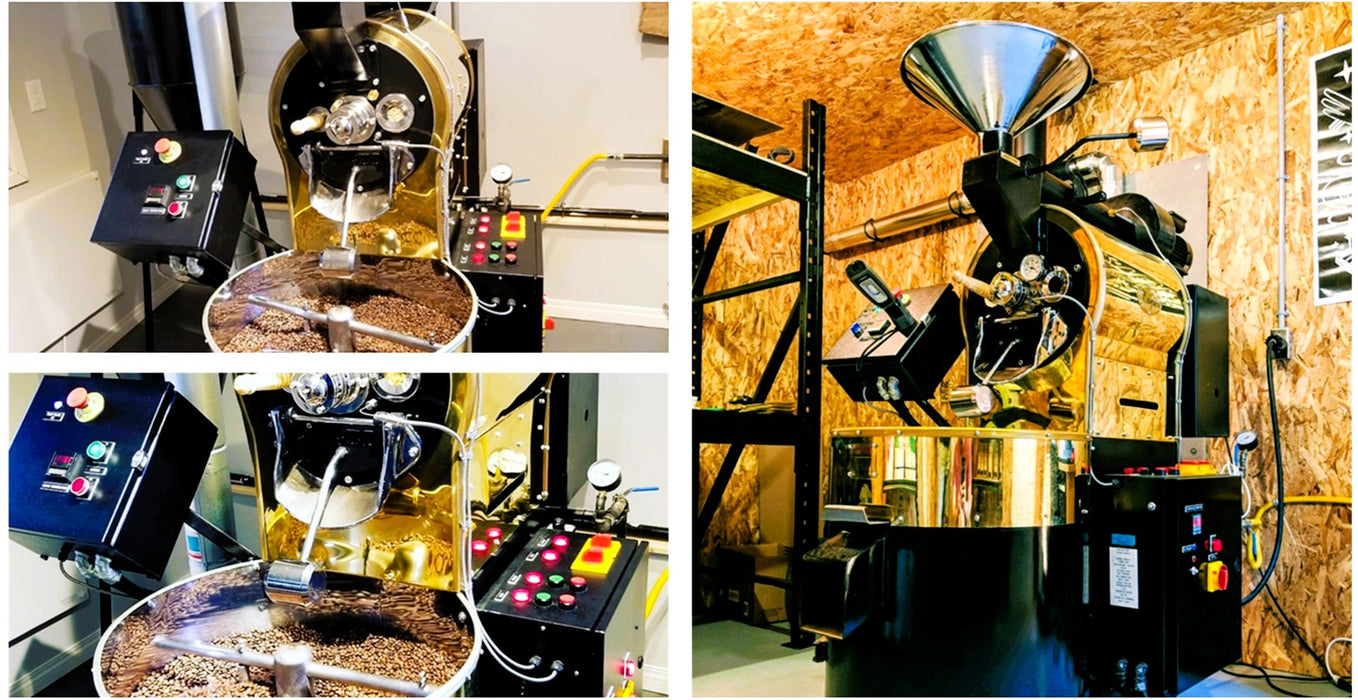
A Toper TKM SX-5 Roaster, a 5 kg workhorse for growing wholesale roasters.
This tier is the workhorse range for wholesale. Think Probat P12, Giesen W15A, Diedrich IR-12, and Loring S15 Falcon. Expect a gas line sized to the burner, ducting, a chaff cyclone, and often an afterburner, depending on your local air rules. Plan floor space for green coffee storage and a cooling area too. Our breakdown of the hidden costs of buying a used roaster covers venting, rigging, and installation in detail. When you're ready, browse medium batch roasters (5 to 18 kg).
Large batch roasters (20 kg and up)
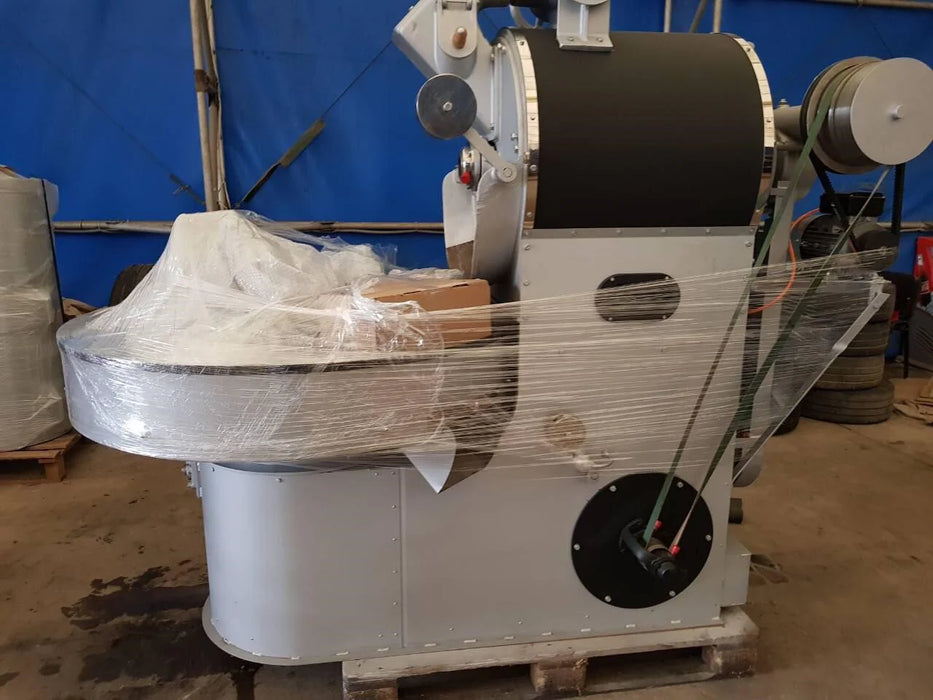
A Probat UG22 Coffee Roaster, a 22 kg workhorse for growing wholesale roasters.
At this size, you're building a production line, not placing a single machine. Think Probat G45, Loring S35 Kestrel, or a 70 kg US Roaster Corp Revelation. These usually come with green coffee loaders, destoners, silos, three-phase power, and a full permit process. See current large batch roasters (20 kg and up), or compare top production machines in our list of the best commercial coffee roasting machines.
Mistakes That Lead to the Wrong Roaster Size
- Sizing to today's sales. Growth eats spare capacity fast. Size to your two-year number.
- Treating the rating as a target. A drum stuffed to its rated weight roasts slowly and can run short on heat. Plan around partial batches.
- Forgetting the non-roasting hours. Warm-up, cooling, cleaning, cupping, and bagging all come out of the same week.
- Ignoring the minimum batch. Every drum has a smallest batch it handles well. If you sell lots of small single-origin lots, a huge drum can work against you. Ask for the minimum before you buy.
- Skipping the utility check. Confirm gas supply, electrical service, ceiling height, and exhaust routing before you commit to a size.
One Big Roaster or Two Smaller Ones?
Both work. One larger roaster gives you more coffee per labor hour, with a single machine to maintain. Two smaller roasters give you backup if one goes down. You can also run small lots on one while the other handles blends.
Many roasteries end up with both by accident. They upgrade, keep the old small machine for single origins and test batches, and like the setup. If space and utilities allow it, that's a smart path.
Outgrown Your Roaster? Sizing Up Works Both Ways
Here's a clear sign it's time: you're past 25 roasting hours most weeks, or you're turning down accounts. The machine you've outgrown is often the exact size another café needs to get started. You can sell your current roaster through CoffeeTec and put the proceeds toward your next machine.
Know the size you need but can't find the right model listed? Request a specific roaster and our team will help you track one down.
Ready to Pick Your Roaster?
Run your two-year weekly volume through the four steps, then check the result against the table. Once you know your size tier, read our guide on buying a used coffee roaster. It covers inspection, service records, and the questions to ask before you buy.
FAQs
What size coffee roaster do I need for a café?
+Most cafés roasting for their own bar and retail shelf fit a 1-3 kg roaster. Take your expected weekly roasted volume (in kilograms) two years out and divide by 38. The result is the smallest batch size that handles it in 25 roasting hours.
Is a 1 kg roaster enough to start a coffee business?
+A 1 kg roaster suits a small café or a test-the-market start. At planning rates, it covers about 38 kg of roasted coffee in a 25-hour week. Planning to sell wholesale? Start at 3 kg or larger so you don't outgrow the machine early.
How much coffee can a 5 kg roaster produce per hour?
+Plan on about 9 kg of green coffee per hour, which is roughly 7.7 kg roasted. Manufacturers often list higher figures based on back-to-back full batches. The lower planning number leaves room for warm-up, cooling, and partial batches.
What does a roaster's kg rating mean?
+The rating is the maximum weight of green coffee the drum takes in one batch. A 12 kg roaster takes up to 12 kg of green coffee per roast. The roasted output is 14 to 20% lighter because the beans lose moisture.
Should I buy a bigger roaster than I need?
+Buy for the volume you expect in two years, which usually means a size bigger than you need today. Don't go so big that your typical order falls below the drum's minimum batch, though. Ask the seller for the minimum batch before you commit.
When should I upgrade my coffee roaster?
+Start planning an upgrade when you regularly need more than 25 roasting hours a week. Another sign is turning down new accounts because you can't keep up. Selling your current roaster can help fund the larger one.
Is it better to have one large roaster or two small ones?
+One large roaster gives you more output per labor hour. Two smaller roasters give you backup and the freedom to run small lots and blends at the same time. Many roasteries keep their first small machine for test batches after they upgrade.
Leave a comment